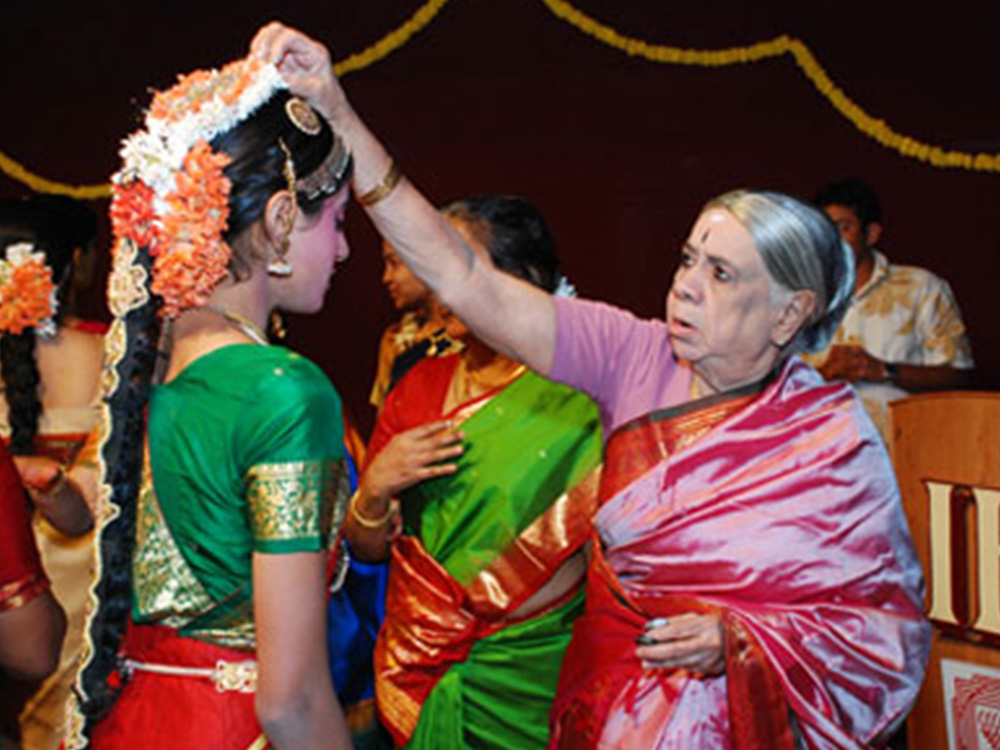
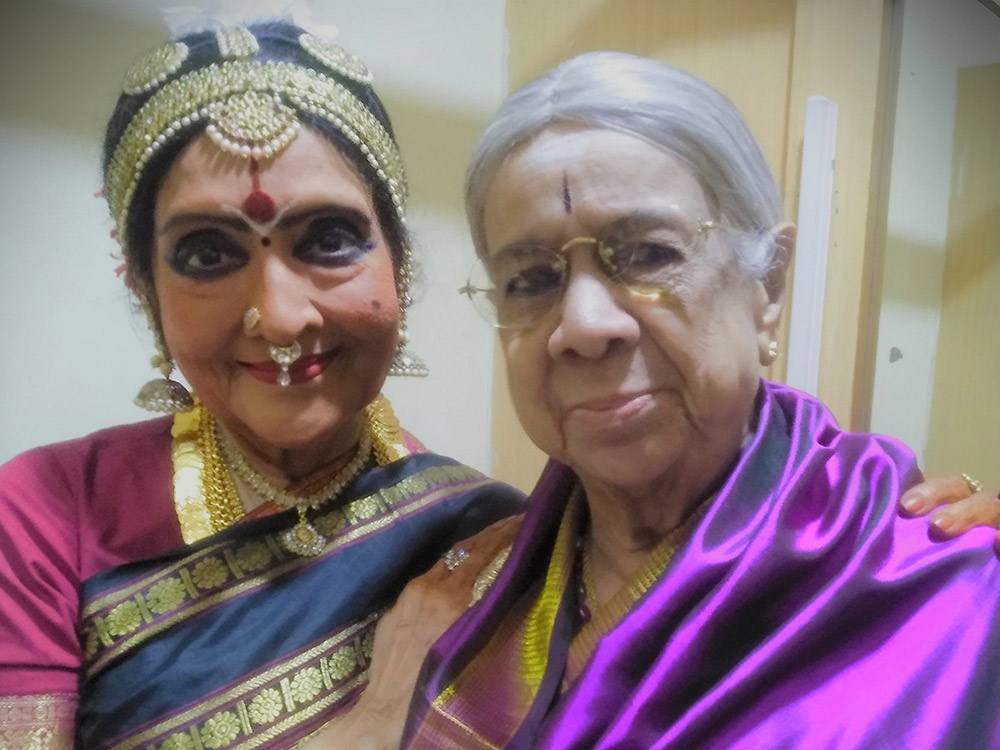
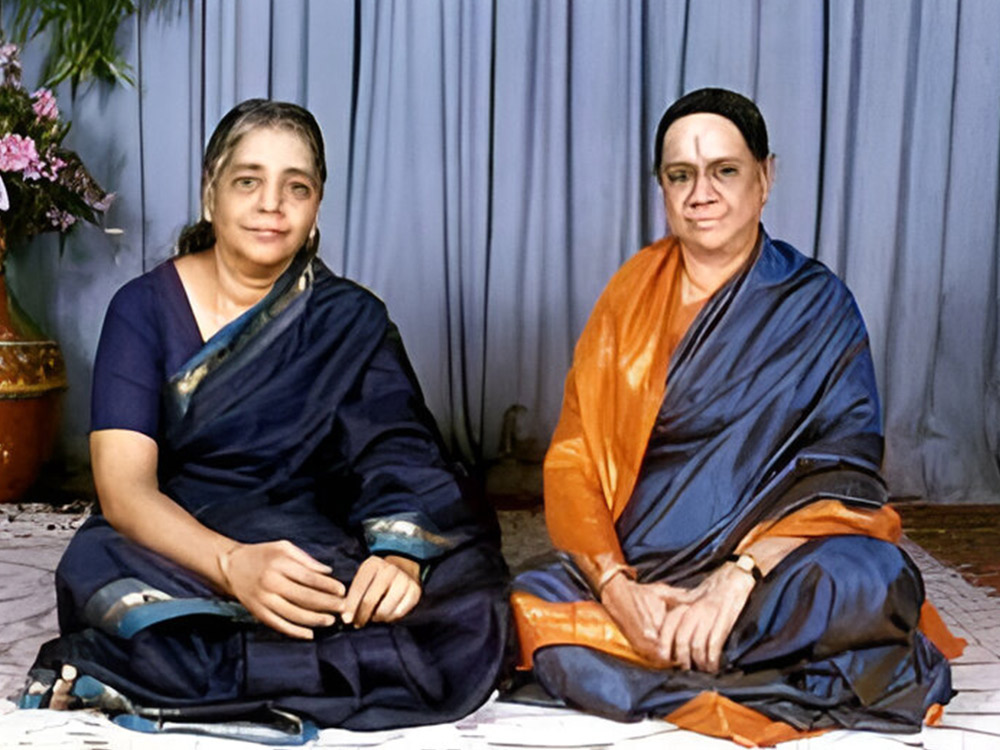
In Bharatanatyam, a ‘Bani’ refers to a distinct style or tradition within the dance form, often associated with a particular guru or school. Banis are characterized by unique techniques, aesthetics and philosophies. Some prominent banis in Bharatanatyam include Thanjavur, Vazhuvoor, Pandanallur and Kalakshetra.
Guru Rajee had two gurus, one who followed the Thanjavur tradition and the other, Pandanallur. She evolved her own style, which her disciples call Rajee-bani. Her choreography is very distinctive. Jati-s have a typical pattern in their composition. There is much beauty in symmetry and she follows this strictly, most of the time. Cross rhythmic patterns in jati-s are in every adavu, every korvai; so even her youngest student can execute ‘cross-rhythm’ flawlessly and with ease. Her compositions in pure Nritta are chaste and traditional, yet have exciting variations. For example, in the repetition of a particular Avartanam of Nritta or an Arudi executed three times before the grand finale, she embellishes it with slight variations that provide just enough excitement in rendering.
In her Abhinaya pieces, she always has a story to tell in every song, what her disciples call ‘expansion’ of a theme. She never lets the slightest opportunity pass where a story could be told through dance / mime. She uses Navarasa like no other Guru to portray every slight nuance, Bhava, in detail.
Guru Rajee Narayan was a rare combination of Bharatanatyam guru, musician, composer and choreographer, with the unique distinction of teaching not only Bharatanatyam, but also Carnatic Music, Natyasastra and Nattuvangam.